Morley's v Metro's – success tastes better for the fast-food franchise


Locations
A version of this article first appeared in WTR Daily, part of World Trademark Review, in August 2024. For further information, please go to www.worldtrademarkreview.com.
- The defendant signed a settlement agreement to rebrand MOWLEY’S as METRO’S
- The IPEC held that there was an obvious likelihood of confusion between METRO’S and MORLEY’S, but the “real dispute” was whether the defendant’s subsequent changes to the METRO’S sign were "reasonable modifications” under the settlement
- The IPEC held that the modified METRO’S sign did not constitute reasonable modifications to the settlement sign and even if it did, the other franchisee defendants would not have been protected under the settlement agreement
In a recent decision relating to a well-known fast-food franchise and its copycats (Morley’s (Fast Foods) Limited v Jeyatharini Sivakumar & Ors [2024] EWHC 1369 (IPEC)), the Intellectual Property Enterprise Court ("IPEC") highlighted some of the potential pitfalls of drafting settlement agreements, particularly in relation to franchisees.
Background
Morley's (Fast Foods) Limited ("Morley's"), a fast-food franchise with over 100 franchised outlets, has needed to enforce its brand against several imitators, particularly as the profile of the Morley's brand has increased following British rapper Stormzy rapping about it and brand tie-ups with the likes of Heinz, Nike, and the Tate Modern in recent years. Morley's owns a registered UK trade mark for the following mark, among others (the "Morley's Mark"):
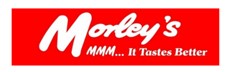
One imitator, the seventh defendant, Kunatheeswaran ("KK"), opened fast-food outlets under the name "Mowley's" between 2010 - 2018. Following a dispute with Morley's, KK signed a settlement agreement with Morley's in 2018, requiring KK to rebrand to "Metro's". The agreement stipulated restrictions on how the "Metro's" branding could be used and by whom. KK could use this branding or "any reasonable modifications thereto" (the "Settlement Sign"):

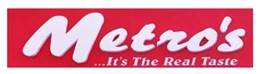
Upon KK commencing use of the below sign (the "Metro's Sign") and allowing his franchisees to do the same (the first to sixth and eighth defendants), Morley's brought a claim for trade mark infringement on the basis that the Metro's Sign was not a "reasonable modification" of the Settlement Sign:
Don't miss a thing, subscribe today!
Stay up to date by subscribing to the latest Intellectual Property insights from the experts at Fieldfisher.
Subscribe nowIPEC Decision
On an assessment of the similarities between the Morley's Mark and the Metro's Sign, Mrs Justice Clarke did not find it "a difficult decision to reach" that the Metro's Sign was similar to the Morley's Mark and there was a likelihood of confusion for the average consumer.
However, Clarke J considered that "the real dispute between the parties" was whether the changes to the Metro's Sign from the Settlement Sign were "reasonable modifications." It was determined that on a reasonable assessment of the clause, based on the history between the parties, "reasonable modifications" should be taken to mean "modifications which did not increase the similarity of the Settlement Sign to the Morley's […] Mark."
Clarke J was satisfied that the changes to the Metro's Sign were not reasonable modifications to the Settlement Sign and its use comprised a breach of the settlement agreement and an infringement of the Morley's Mark under s 10(2)(b) Trade Marks Act 1994.
Furthermore, Clarke J noted that even if the Metro's Sign was a reasonable modification of the Settlement Sign, the franchisee defendants would not have been protected from infringing the Morley's Mark by the settlement agreement; they were not parties to the agreement, the agreement expressly provided that its terms were not enforceable by third parties, and it was entered into by Morley's on the understanding that it would only allow KK (and another signatory) to use the Settlement Sign – Morley's indicated it would not have signed the agreement had it allowed KK to franchise the Metro's brand. The court was therefore not prepared to imply a term into the agreement that would afford the franchisee any rights under it.
Therefore, the franchisee defendants were also found to have infringed the Morley's Mark and KK was found to be jointly liable for infringement under the principles of joint tortfeasorship.
Comment
This decision illustrates the importance of drafting settlement and co-existence agreements that clearly set out the rights, obligations and restrictions that apply to each party. More clearly defining the circumstances by which a sign will fall outside of the permitted use afforded by the agreement will reduce the likelihood of potential claims in the future. Likewise, ensuring that the parties discuss their plans and expectations about the future of their brand, particularly in relation to the rights of third parties such as franchisees, and ensuring these are reflected in the agreement will also reduce any uncertainty about who the rights and obligations under the agreement extend to.