Now the shoe is on the other foot – Dream Pairs ultimately prevails in trade mark battle with Umbro
In a judgment handed down on 24 June 2025 (Iconix Luxembourg Holdings SARL (Respondent) v Dream Pairs Europe Inc and another (Appellants) [2025] UKSC 25), the Supreme Court allowed an appeal by the appellants against a finding that they had infringed the iconic double diamond logo of the Umbro sportswear brand owned by the respondent.

We previously blogged about the first instance decision – here: Diamonds are forever, but Umbro's diamond reputation did not go far enough | Fieldfisher – and the Court of Appeal decision – here: A game of two halves: Umbro prevails in diamond mark infringement appeal | Fieldfisher.
Background
The respondent's Umbro brand has used its well-known double diamond logo (the "Umbro Trade Marks") on sportswear for over half a century, and on football boots and other footwear for almost four decades.
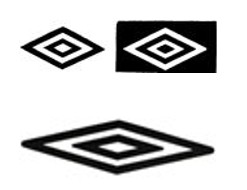
The appellants are retailers of sports footwear using the brand Dream Pairs alongside a heavily stylised logo comprising the letters D and P in a nested square shape (the "DP Sign"). The DP Sign is commonly affixed to footwear in the Dream Pairs range, as shown below.
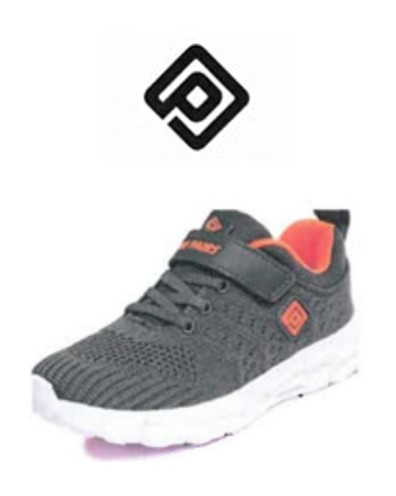
In the first instance decision in the High Court, Mr Justice Miles held that there was "at most a very low degree of [visual] similarity" between the Umbro Trade Marks and the DP Sign. Despite (or because of) the "faint" similarities between the marks and the sign, Miles J went on to undertake a global assessment, including considering the fact that when viewed from "realistic and representative viewing angles" the perspective of the DP Sign could be skewed horizontally to more closely resemble the Umbro Trade Marks (as seen in the footwear image above) and whether this could give rise to post-sale confusion. However, Miles J ultimately held that this was not sufficient for a finding of trade mark infringement.
In an appeal to the Court of Appeal by Umbro, Lord Justice Arnold's judgment considered that Miles J's conclusion on the similarity was "irrational" and therefore conducted a fresh multi-factorial assessment of the similarity of the marks. He held that the Umbro Trade Marks and the DP Sign were, in fact, similar to "a moderately high level", in particular when viewed from a different angle in a post-sale context, e.g. from above when looking down at a football boot. He therefore held that there was a likelihood of confusion in a post-sale context and Dream Pairs' use of the DP Sign had infringed the Umbro Trade Marks, even if there was no likelihood of confusion at the point of sale.
Don't miss a thing, subscribe today!
Stay up to date by subscribing to the latest IP insights from the experts at Fieldfisher.
Appeal to the Supreme Court
Dream Pairs appealed to the Supreme Court on three issues:
- Whether "realistic and representative" circumstances in a post-sale context can be taken into account when considering whether signs are similar ("the similarity issue");
- Whether post-sale confusion can form the sole basis for infringement or whether it can only be taken into account when it specifically impacts a subsequent transactional context, i.e. at the point of sale ("the confusion issue"); and
- Whether the Court of Appeal was entitled to re-evaluate the similarity of the Umbro Trade Marks and the DP Sign.
The similarity issue
The Supreme Court unanimously disagreed with Dream Pairs' submissions on this ground of appeal, holding that "realistic and representative post-sale circumstances", such as considering the angle a sign would typically be viewed at, can be taken into account when establishing whether, and to what extent, signs are similar. The judgment confirmed that the global assessment of likelihood of confusion should only proceed once the multi-factorial assessment of similarity has taken place and at least a modicum of similarity has been found. It also clarified that post-sale circumstances cannot be used to rule out existing and intrinsic similarities, but can be used to establish or enhance similarities. However, they emphasised that these circumstances must be based on plausible post-sale scenarios and reflective of the overall impression made to the average consumer to ensure that no absurdity will result.
The confusion issue
Dream Pairs submitted that post-sale confusion cannot amount to infringement unless it affects the essential function of a trade mark as a guarantee of origin "at the point of a subsequent sale or in a transactional context " and that any post-sale confusion would by "dispelled by the time of any actual […] purchase that the average consumer might make". The Supreme Court unanimously disagreed.
When considering section 10(4) of the Trade Marks Act 1994 (the "Act"), which sets out a non-exhaustive list of scenarios in which a person is considered to be "using" a potentially infringing sign, the judgment comments that several of these potential "uses" are separate or removed from the time of purchase, such as affixing the sign to goods or use of the sign in advertising. Dream Pairs' position would therefore be irreconcilable with the established principle that any use of a sign under section 10(4) of the Act could comprise trade mark infringement, whether it is at the point of sale or not, such as advertising.
The Supreme Court also considered the Court of Justice of the European Union's ("CJEU") position on the matter, noting they supported the position that a trade mark "continues to identify origin even after sale" and that "perceptions of a sign post-sale leading to confusion […] are not limited to perceptions at the point of a subsequent sale".
Therefore, the Supreme Court held that post-sale confusion could amount to an actionable infringement, regardless of whether it impacts a subsequent sale, dismissing this ground of appeal.
The re-evaluation by the Court of Appeal
Despite disagreeing with Dream Pairs on the similarity issue and the confusion issue, the Supreme Court did consider that the Court of Appeal went beyond its remit in undertaking a fresh multi-factorial assessment of the similarity between the Umbro Trade Marks and the DP Sign when reaching its decision.
The Supreme Court decision sets out a clear reminder of the purpose of the appeal system – it notes that the first instance trial is not a dress rehearsal and that it is not for the appellate court's judge to duplicate the work done by the trial judge unless it is established that the trial judge was plainly wrong or there has been a significant error of principle. It is not enough, for example, to show that the appellate court might merely have arrived at a different conclusion – such as here, when undertaking the multi-factorial assessment of similarity.
In reviewing Miles J's judgment, the Supreme Court did not find any irrationality, error of law or error of principle in his approach or decision-making in relation to the similarity assessment. While they acknowledged that judicial views might differ on this issue (perhaps indicating that they too may have reached a different decision if pressed), they did not consider any of Miles J's conclusions to be so wrong as to be appealable and therefore considered that the Court of Appeal had erred in substituting their own view when reaching a decision.
On this basis, the Supreme Court allowed the appeal and upheld the trial judge's decision that no infringement had taken place.
Comment
Some commentators had wondered before the judgment was issued whether the Supreme Court would take this opportunity to diverge from EU law on its position on post-sale confusion. Instead, it has unequivocally confirmed that post-sale confusion is relevant when assessing trade mark infringement and therefore the UK position remains aligned with the EU position.
It is interesting that despite the Supreme Court disagreeing with Dream Pairs' two main avenues of appeal (the similarity and confusion issues) they still allowed the appeal based on a scolding of the Court of Appeal's decision to conduct a fresh assessment of the similarity of the marks.
While the Supreme Court's comments on post-sale similarity and confusion might suggest that this entire matter could have very easily gone in a different direction, they chose to stand by and reinforce the trial judge's original assessment. Moreover, this should serve as an unambiguous reminder to the courts, practitioners and rights-holders that the first instance trial is just as important as any appeal proceedings and that you should put forward your best arguments from the beginning as the trial judge's assessment of similarity and likelihood of confusion may ultimately hold just as much (if not more) weight than any other.
