Reputation wars: General Court rules on Zara v pastaZARA
The EU General Court has reversed a decision by the Board of Appeal ("BoA") of the European Union Intellectual Property Office ("EUIPO"), thereby rejecting an opposition filed by global fashion heavyweight Zara against an EU Trade Mark ("EUTM") application for "pastaZARA Sublime" and Logo (the "Application").

The Court found that, even though the earlier ZARA mark enjoyed unassailable reputation, there was no consumer link established between the parties' respective commercial sectors. Further, the Court held that the applicant had "due cause" to use the applied-for sign (Ffauf Italia SpA v EUIPO (Case T-425/24)).
Background
Back in June 2008, Ffauf Italia SpA applied for a figurative EUTM comprising the verbal elements "pastaZARA Sublime" for pasta-related goods in Class 30:
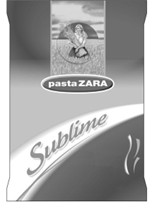
(the "Sign").
Industria de Diseño Textil SA ("Iditex"), a Spanish multinational clothing company behind some of the world's most prominent retail fashion brands including Zara and Zara Home, brought an opposition against the Application in December 2008.
Iditex based the opposition on its earlier EUTM registrations for "ZARA" under Art.s 8(1)(b) and 8(5) of the old Community Trade Mark Regulation 40/94 (the wording of which is substantively equivalent to the current EU Trade Mark Regulation 2017/1001 ("EUTMR")).
The proceedings before the EUIPO were initially suspended as the applicant disputed one of Iditex's prior marks initially relied upon in the opposition. This was partially revoked as a result with respect to certain goods in Class 30.
Once resumed, the Opposition Division allowed the opposition in May 2023 only on the basis of the Art. 8(5) EUTMR, which gives extended protection to trade marks of repute thereby guarding against any use of an identical or similar mark that takes unfair advantage of, or is detrimental to, the distinctive character or the repute of the earlier mark.
The applicant appealed the decision, which was upheld by the BoA. In essence, the EUIPO found that the ZARA mark had substantial reputation, and that the relevant public would find a link between the conflicting marks due to "current market trends" of fashion brands entering the food and beverage industry.
The applicant appealed the BoA decision to the EU General Court in relation to (i) the reputation of the ZARA mark; (ii) the existence of a similarity between the conflicting marks; (iii) the existence of a link between those signs; (iv) the existence of a risk of injury if the Application became registered; and (v) the existence of due cause for registering and using the Sign.
The General Court's decision
In the appeal, the General Court agreed with the BoA that the prior ZARA mark had a high degree of reputation in relation to goods in Class 25. However, it found that the BoA made some crucial mistakes in its assessment of the Art. 8(5) EUTMR grounds:
Similarity
In finding a high degree of similarity between the conflicting marks, the BoA over-relied on the verbal elements of the Sign, in particular, the "ZARA" element which it deemed dominant, and which is identical to the opponent's prior word mark. Conversely, the General Court noted the figurative nature of the Sign comprising several verbal and non-verbal elements, none of which it held to be dominant. Furthermore, it noted that reputation is not a relevant factor when considering the similarity of the signs. As a result, the General Court found a low degree of similarity between the conflicting marks.
Consumer link between the conflicting marks
The General Court confirmed the enhanced protection enjoyed by marks of repute, in that these can be enforced against similar or identical marks even in the absence of an overlap with the applied-for goods and/or services. However, the Court issued a stark reminder that such enhanced protection nonetheless requires consumers to establish a link between the conflicting marks. In essence, a high degree of reputation for certain goods or services does not necessarily imply that there is a link with a similar mark. Indeed, the fact that a mark with a reputation is wholly incorporated in a later mark with other elements does not mean that the relevant public would necessarily make the requisite link. Further, the General Court noted that where there is low similarity between the conflicting marks, such consumer link must be established by some other factor, including their respective goods and/or services.
In the context of its finding of low similarity, the Court agreed with the BoA that the goods of the conflicting marks had nothing in common, and it further found that the BoA erred in finding that "current market trends" of fashion brands entering the food and beverage industry was sufficient for the relevant public to establish a link between the ZARA mark and the Sign. Specifically, the General Court noted that the BoA's evidence in this regard—(i) did not establish that such a trend was applicable in June 2008 when the Application was filed; and (ii) was of dubious relevance in any event. As a result, the General Court found that no consumer link between the conflicting marks had been established.
Due cause
Finally, the General Court held that the Applicant had due cause for using the Sign, due to its historical association with the Dalmatian city of Zara (now Zadar in Croatia) where it opened a factory in the 1930s, and to its use of marks comprising the verbal elements "ZARA" and "pastaZARA” since the 1960s (before Iditex's first use of its ZARA mark in 1975 and before its mark was applied for in 2001). It is notable that the General Court did not need to consider due cause, having already found no link established between the conflicting marks and therefore that the opposition failed. However, it appears that the judges sought to correct the BoA's approach in this matter and, in so doing, established a discrete ground for allowing the applicant's appeal.
As a result, the General Court annulled the BoA's opposition decision, paving the way for the Application's registration in the EU. In light of the above, the Court did not have to consider whether the Application would pose a risk of injury to the ZARA mark if registered.
Comment
This is the second time in recent years where Iditex was unsuccessful in enforcing its ZARA mark solely on the basis of its considerable reputation. We previously blogged about the UK IPO opposition decision where Zara took action against an independent boutique in the north east of England here: Fashion wars: Zara unsuccessfully seeks re-brand from Darlington's House of Zana.
Owners of highly reputable brands such as Zara should heed the General Court's warning: reputation, no matter how significant, should not and cannot be used as a blunt instrument to prevent the use and registration of marginally similar marks in significantly different commercial sectors.
